

FDA, NSF, Cooper Standard ISG and You:
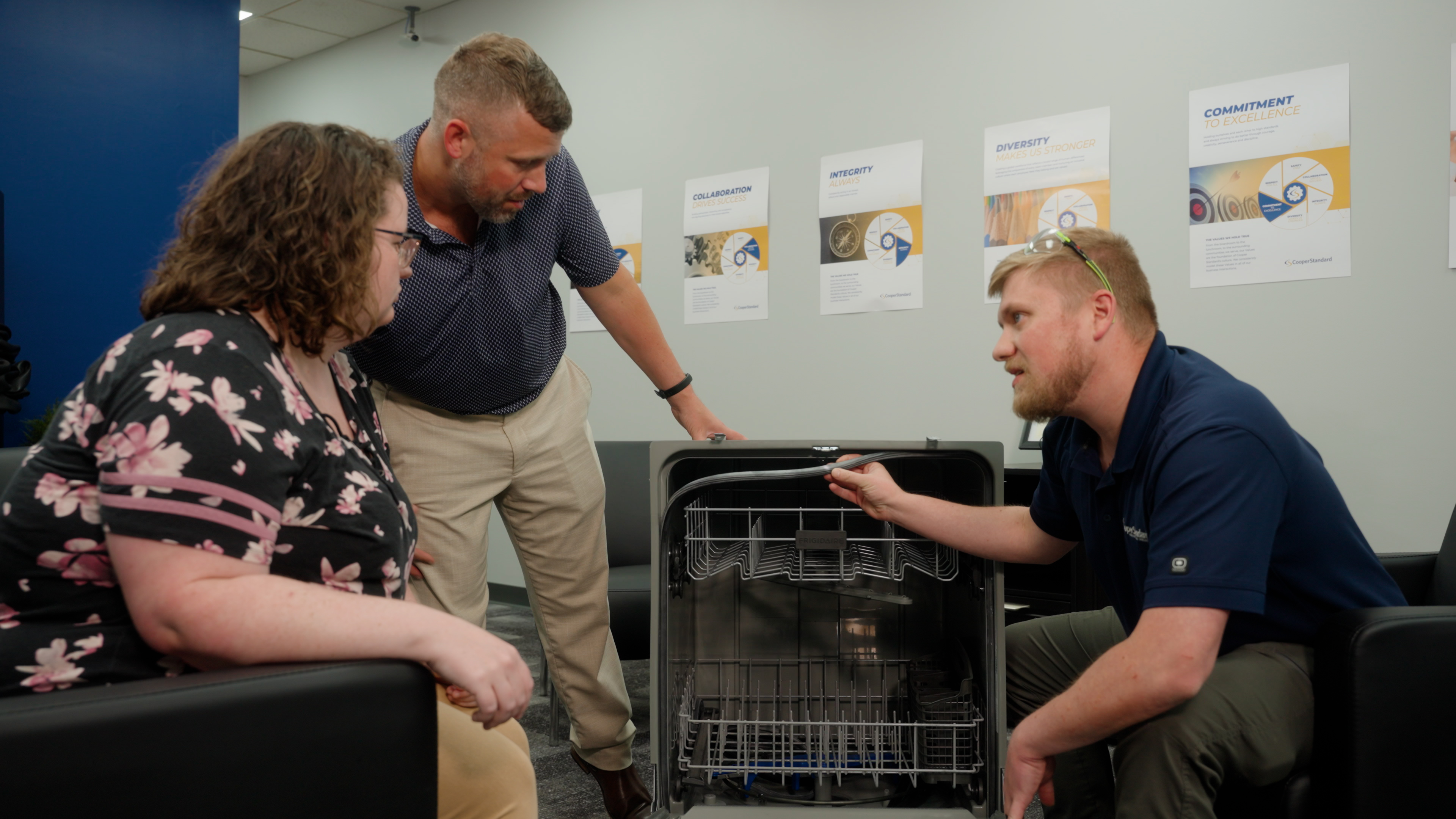
Many industrial sealing and fluid handling customers must comply with numerous regulatory agencies, certifying bodies and industry standards that affect product development
Cooper Standard ISG proactively monitors these requirements across industries such as Appliances, HVAC, Window & Door, Marine, Heavy Vehicles and various other industrial and transportation industries. We assist customers in developing compliant materials, submitting documentation, avoiding costs and fines, earning certifications, and entering global markets profitably.
We offer proven alternative materials and leverage in-house expertise in materials compounding and profile design, including Finite Element Analysis, to meet requirements without sacrificing performance. Our in-house engineers have your back and stand ready to develop solutions to any need.
In this series, we will focus on the organizations and requirements that most frequently impact our products and our customers, including ASTM; UL; California OEHHA’s Prop 65; the European Chemical Agency’s REACH and RoHS; the EPA’s PFAS mandates; the Responsible Minerals Act; and, finally, the FDA, along with some of its international analogs and its de facto certifying body, NSF.
Each installment will explain industry-specific responsibilities and how Cooper Standard ISG helps ensure compliance for sealing systems, fluid handling systems, and related components.
In this blog post, we will focus on FDA and NSF.
The U.S. Food & Drug Administration (FDA) and NSF International (founded as the National Sanitation Foundation) are separate organizations, but in the world of manufacturing food safe seals, hoses and other components for dishwashers, icemakers and other products, they are considered in tandem. Alternatively, SGS North America can also test and certify many NSF standards. While UL is not on the FDA third-party certification bodies database, https://datadashboard.fda.gov/oii/fd/tpp.htm, UL also performs UL sanitation certification to the NSF standards.
The FDA is a federal government agency that enforces CFR Title 21 to ensure that only food safe materials are used in food-related applications. If a material isn’t FDA compliant, it cannot legally be marketed for food contact use in the U.S. The organization has the power to fine manufacturers that are caught using materials that are deemed not food safe and can force product recalls or take other legal action.
The NSF is a private certification body that tests components made from FDA-compliant materials in a final product, ensuring food-safe performance in light of concerns such as potential contaminant leaching, cleanability, bacterial resistance, and durability under real-world operating conditions such as heat, detergents and moisture.
How we can help
Cooper Standard ISG specializes in compounding food-safe materials and engineering profile designs for sealing and fluid handling, a capability frequently used by appliance manufacturers. Since the FDA requires food-safe materials for any food or beverage, we also assist other OEMs in niche areas, such as seals for food trucks, marine ice box coolers, and oil-resistant, sterilizable silicone milk hoses for agriculture.
Although the FDA is a domestic organization, there are similar organizations in the EU, such as German Federal Institute for Risk Assessment (BFR) and the French Agency for Food, Environmental and Occupational Health & Safety (ANSES), where we work with manufacturers to meet relevant European requirements as well.
An effective partner
Since we often work with partners in food safe applications, we are well-versed in using FDA-suitable materials and have many ready to go. Because the list of approved substances via the Code of Federal Regulation and Food Contact Substance Notifications is limited, many manufacturers avoid these products due to the regulatory challenges. Our success comes from accessing or compounding FDA-compliant materials and overcoming their performance limits through expert design engineering, using tools like finite element analysis and computational fluid dynamics to prove out designs. We combine these capabilities to find solutions and meet tough FDA and NSF requirements.
Contact us for your next food-safe materials project. We can help you stay on the right side of FDA regulations and earn the NSF seal for your final product.