

Case Study: Accelerating HVAC Seal Development with FEA
Challenge
Develop high-performance blade seals for a new HVAC damper system while meeting strict airflow, temperature, tolerance and regulatory requirements.
Cooper Standard ISG Solution
- Finite Element Analysis (FEA) to optimize seal performance before physical prototyping
- FEA-validated pressure-sensitive adhesive (PSA) attachment strategy for long-term durability and simplified assembly
- Extensive library of UL-certified materials, including UL 555S, UL 99 and UL 157 approved compounds
- Integrated engineering, material development and manufacturing expertise
Results at a Glance
Metric | Outcome* |
|---|---|
Prototype Iterations | ↓ 40% |
Development Timeline | ↓ 8 Weeks |
Assembly Time | ↓ 20% |
Operating Temperature Capability | Up to 350°F |
Tooling Modifications | Reduced from 3 to 1 |
Performance Validation | Completed Before Tooling Investment |
Compliance Readiness | Accelerated Through Pre-Certified Materials |
*Results achieved during the development program.
Challenge: Meeting Extreme HVAC Performance Requirements
A leading American HVAC equipment manufacturer approached Cooper Standard ISG to support the development of a new damper system requiring highly precise, high-performing blade seals.
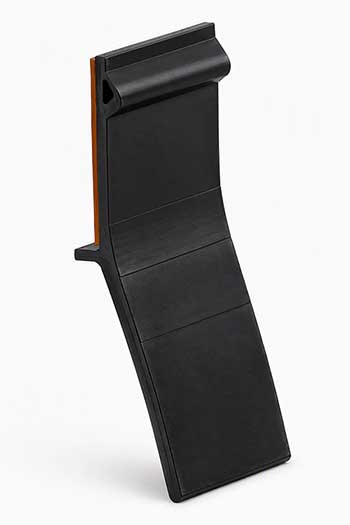
The application presented several significant engineering challenges. The damper assembly incorporated eight blades with seals on both sides, requiring a total of sixteen seals. Throughout the operating range, the design needed to maintain a precise 0.06-inch clearance between blades while delivering consistent sealing performance.
In addition, the seals were required to perform under demanding operating conditions, including air velocities up to 2,400 feet per minute, air pressure of 4.5 inches water gauge and temperatures reaching 250°F.
The project also required compliance with UL 555S smoke and leakage standards for dynamic, high-temperature applications.
To meet these requirements while minimizing development time and risk, the customer needed a sealing partner capable of validating performance before committing to costly tooling and multiple prototype iterations.
Solution: Virtual Design Optimization Backed by Material Expertise
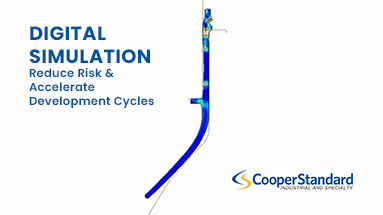
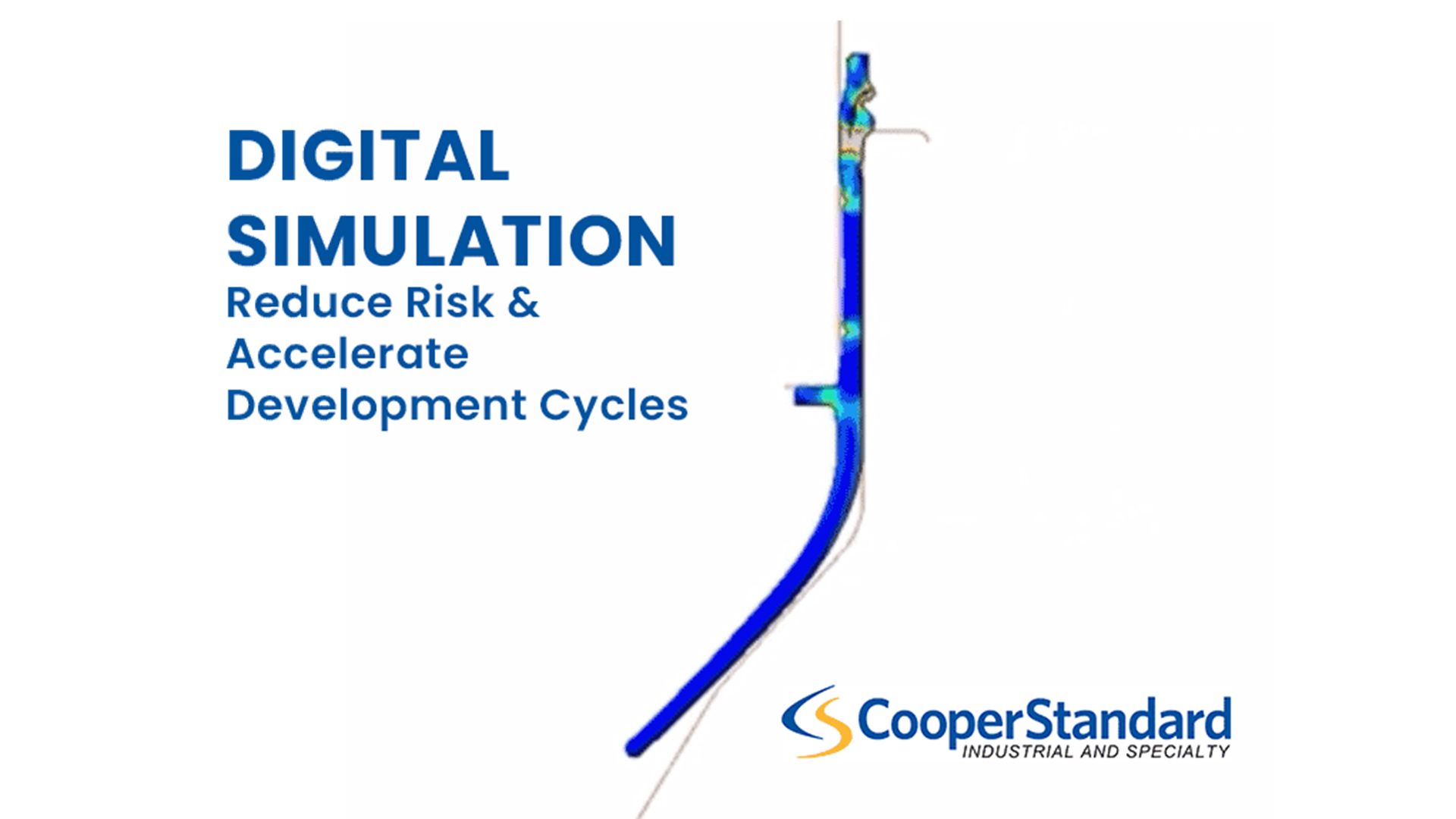
Cooper Standard ISG applied Finite Element Analysis (FEA) early in the design process to virtually evaluate and optimize seal performance before physical prototypes were produced.
FEA enabled engineers to simulate real-world operating conditions, including compression retention, airflow, pressure loads, temperature exposure and operating cycles. Multiple seal geometries were evaluated and refined digitally, allowing rapid design optimization while reducing the need for trial-and-error development.
KEY DIFFERENTIATOR
FEA not only optimized seal performance but also identified the most effective attachment method, improving long-term durability while simplifying customer assembly operations.
While the original concept considered a slip-on attachment method, FEA analysis helped demonstrate that a peel-and-stick solution utilizing pre-applied high-temperature adhesive tape would provide superior long-term performance.
By analyzing the forces acting on the seal throughout the operating cycle, Cooper Standard ISG was able to validate the adhesive strategy and confirm reliable retention under demanding temperature, pressure and airflow conditions.
The analysis also identified the optimal adhesive tape dimensions and placement within the seal profile. Because the tape could be applied directly during the extrusion process, the final solution reduced installation complexity, improved manufacturing consistency and streamlined assembly for the customer.
Results: Performance Validated Before Prototyping
By combining FEA-driven design optimization, adhesive validation and material expertise, Cooper Standard ISG helped the customer reduce development risk while accelerating the path to production.
FEA modeling demonstrated that the optimized seal design could maintain the required blade clearances while performing under the specified airflow, pressure and temperature conditions. The final seal design ultimately demonstrated successful performance at temperatures up to 350°F, exceeding the original operating requirements.
Beyond validating seal performance, the project also benefited from data-driven adhesive selection and placement optimization. By proving both the seal design and attachment strategy virtually, the engineering team reduced development uncertainty and increased confidence before prototype validation and production tooling investment.
The result was a more efficient development process, a production-ready sealing solution and greater confidence in long-term field performance.
Technical Detail: Material Selection Was Equally Critical
While seal geometry and attachment strategy were critical to project success, material selection played an equally important role.
One of the customer's primary requirements was compliance with UL 555S, the industry standard governing smoke and leakage performance under dynamic high-temperature and high-pressure conditions.
Unlike many sealing suppliers that must begin the qualification process from scratch, Cooper Standard ISG offers an extensive library of materials that have already been tested and certified for demanding industry standards.
This portfolio includes materials certified to UL 555S as well as related standards such as UL 99 and UL 157. Access to proven, pre-certified material options helps customers reduce qualification risk, accelerate development timelines and move from concept to commercialization more efficiently.
For this application, silicone-based compounds were selected because of their ability to withstand elevated temperatures while maintaining long-term sealing performance. The chosen material successfully met the demanding environmental and performance requirements of the HVAC application.
Unlike many suppliers, Cooper Standard ISG formulates and custom blends silicone compounds in-house. This capability provides greater control over material properties, quality, consistency and development speed while eliminating many of the delays associated with third-party compound sourcing.
By combining advanced simulation tools with an extensive library of certified materials and in-house compounding expertise, Cooper Standard ISG helped the customer achieve both performance and compliance objectives with confidence.
Engineering Expertise That Accelerates Results
No matter how challenging the application, Cooper Standard ISG combines advanced simulation capabilities, material science expertise and manufacturing knowledge to help customers develop optimized sealing solutions faster.
From FEA-driven design validation to adhesive optimization and material selection, Cooper Standard ISG delivers the engineering support manufacturers need to reduce development risk, improve performance and accelerate speed-to-market.
Contact Cooper Standard ISG to discuss your next sealing challenge and discover how virtual design optimization, certified material expertise and integrated engineering support can help bring your product to market faster.